Fund the compute that finishes ParanoidBSD
The port is running. The deterministic tooling is written, the verification gates are in place, and the migration driver works. What is missing is the inference and verification compute to carry it through the remaining files — which is the entire reason this campaign exists.
Pledging happens entirely on Kickstarter. This site takes no payment details, sets no cookies and runs no trackers. The campaign is all-or-nothing: if it does not reach its goal by 12 November 2026, nobody is charged anything.
Why this needs money, and why it needs this kind of money
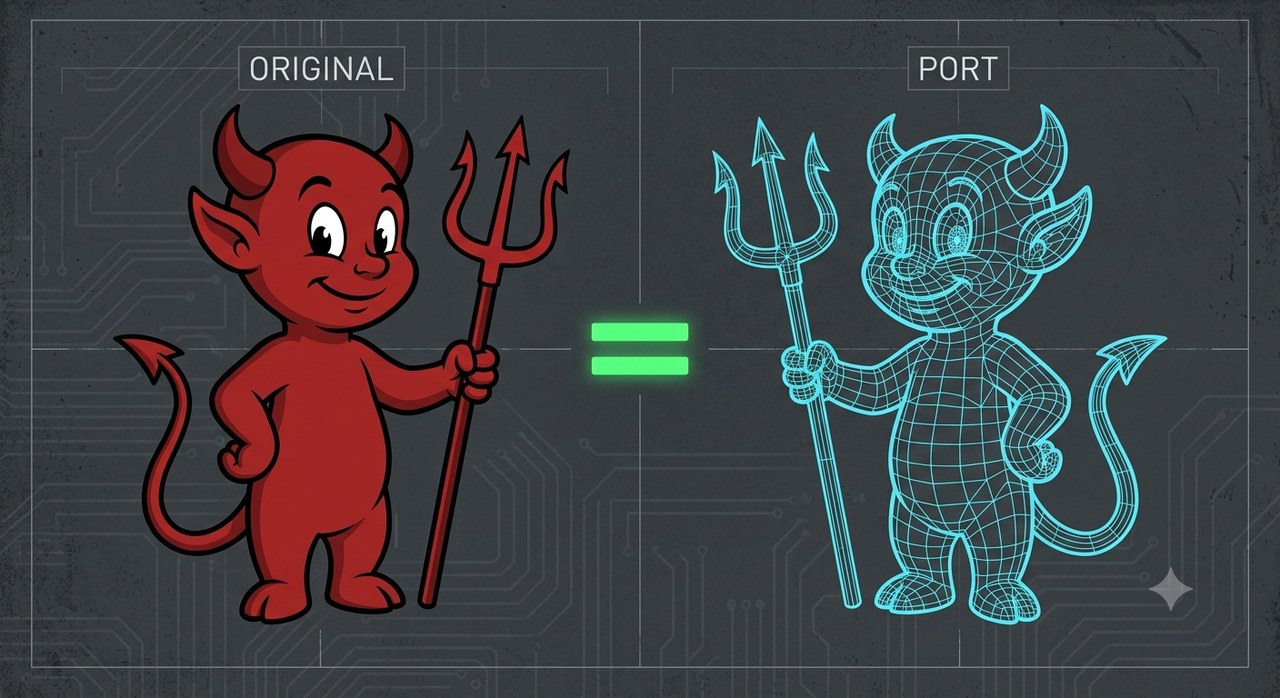
Porting a hardened BSD to C++23 is a decade of full-time work done by hand. It is also the kind of task where a language model is genuinely useful — mechanical translation with a strict specification to check against, which is close to the best case for the technology.
The design already reflects that. Deterministic rewrite passes handle everything they safely can, for free. Models are used only on the residue: stubbed inventory entries and the files the deterministic passes refused. Every model output then goes through compile, ASan, UBSan, differential execution and a comparison at the level of the compiler’s Intermediate Representation (IR) before it counts.
That verification is not optional and it is not cheap. Each file is attempted, checked, often rejected and retried. The cost is in the loop, not in a single pass — and the loop is what turns model output into something a security-focused operating system can actually ship.
- 4,786 hand-authored C++23 modules — roughly 352,000 lines — behind a build gate that runs green
- Inventory tooling that scores every C source file
- Deterministic rewrite passes, tiers 0–4
- The agent port driver, with worker pools and escalation
- Compile, sanitizer, differential and IR verification gates
- Provenance tracking, so licence boundaries stay auditable
- The capability nucleus design and the kernel C++ Application Binary Interface (ABI) spec
All of it is in the repository now, under an open licence, whether or not this campaign ever funds. You can check every claim on this page against the source before deciding anything.
The budget model, with the assumptions exposed
Most crowdfunding budgets are a pie chart with round numbers. This is the actual model: change any assumption and watch the total move. The defaults are planning estimates, clearly marked as such — not quoted prices, and not measured costs.
pbsd — port cost model
Scope
Per attempt
Provider rates — set these to your provider’s current pricing
Where it goes
These are planning estimates. File counts, attempt rates and token volumes are informed guesses from the migration logs, not audited figures. Provider rates change constantly — the fields above are editable precisely because you should not trust a number I hard-coded.
One perk, and otherwise donations
There is no tier ladder, no merchandise, and no early-access ranking. Almost everything the campaign funds — the port, the tooling, the verification — is published under an open licence as it is written, so it reaches you whether you paid for it or not. Charging for staged access to work that is already public would be theatre.
Donation
The default, and what most backing is expected to be. It buys compute: inference for the files the deterministic passes could not close, and the verification runs that gate them.
- Funds the port directly, with no overhead taken out for rewards
- Everything it produces is public under AGPL-3.0+ regardless
- No tier, no ranking, no perk — and none implied
Request a feature
Name something you want ParanoidBSD to do, and it gets built — scoped honestly with you first, so nobody pays ten thousand dollars for something that turns out to be impossible or already planned.
- A feature of your choosing, specified with you before any commitment
- Written under the same verification gates as everything else — no shortcut because it is paid for
- Published open-source like the rest of the tree
- A written account of how the work went, including if it went badly
- Estimated delivery December 2027, shipping anywhere — it is software
What funding changes
Inventory, deterministic passes, agent driver, verification pipeline, provenance tracking. In the repository now.
Porting bin/ and usr.bin/ in scoped batches, gated on differential verification. Rate is limited by available compute.
The capability and handle nucleus, freestanding C++23, under the kernel ABI spec.
KDE Plasma 6, KWin and frameworks integrated against the ported base.
Installable builds that a person other than the author can run.
What could go wrong
Kickstarter requires a risks section. This one is written to be actually useful.
The port could stall on hard files
Provider pricing could move
This is one person
An AI-assisted OS port invites justified scepticism
Security software from an unaudited source
Read the source, then decide
Everything claimed on this page is checkable today. The tooling, the gates, the provenance records and the migration logs are all public. Read them first — backing a port you have not inspected is exactly the mistake this project is arguing against.